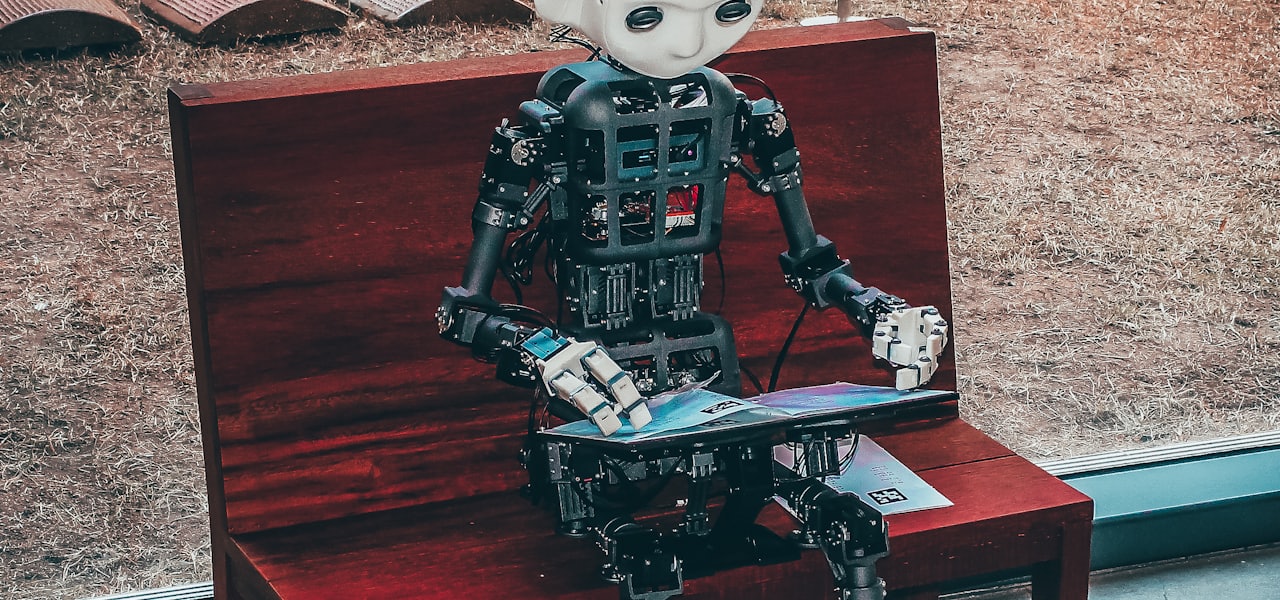
The controversies surrounding artificial intelligence encompass a broad range of public, academic, and political debates regarding the societal effects of artificial intelligence (AI). These debates intensified particularly in the late 2010s and 2020s, coinciding with an accelerated period of development known as the AI boom. While advocates emphasize the technology's potential to solve complex problems and enhance human quality of life, detractors highlight a wide array of dangers and challenges. These include concerns over ethics, plagiarism and theft, fraud, safety and alignment, environmental impacts, technological unemployment, and the spread of misinformation. It also covers severe future or theoretical challenges, such as the emergence of artificial superintelligence and existential risks. == 2016 == === Microsoft Tay chatbot (2016) === On March 23, 2016, Microsoft released Tay, a chatbot designed to mimic the language patterns of a 19-year-old American girl and learn from interactions with Twitter users. Soon after its launch, Tay began posting racist, sexist, and otherwise inflammatory tweets after Twitter users deliberately taught it offensive phrases and exploited its "repeat after me" capability. Examples of controversial outputs included Holocaust denial and calls for genocide using racial slurs. Within 16 hours of its release, Microsoft suspended the Twitter account, deleted the offensive tweets, and stated that Tay had suffered from a "coordinated attack by a subset of people" that "exploited a vulnerability." Tay was briefly and accidentally re-released on March 30 during testing, after which it was permanently shut down. Microsoft CEO Satya Nadella later stated that Tay "has had a great influence on how Microsoft is approaching AI" and taught the company the importance of taking accountability. == 2022 == === Voiceverse NFT plagiarism scandal (2022) === On January 14, 2022, voice actor Troy Baker announced a partnership with Voiceverse, a blockchain-based company that marketed proprietary AI voice cloning technology as non-fungible tokens (NFT), triggering immediate backlash over environmental concerns, fears that AI could displace human voice actors, and concerns about fraud. Later that same day, the pseudonymous creator of 15.ai—a free, non-commercial AI voice synthesis research project—revealed through server logs that Voiceverse had used 15.ai to generate voice samples, pitch-shifted them to make them unrecognizable, and falsely marketed them as their own proprietary technology before selling them as NFTs; the developer of 15.ai had previously stated that they had no interest in incorporating NFTs into their work. Voiceverse confessed within an hour and stated that their marketing team had used 15.ai without attribution while rushing to create a demo. News publications and AI watchdog groups universally characterized the incident as theft stemming from generative artificial intelligence. === Théâtre D'opéra Spatial (2022) === On August 29, 2022, Jason Michael Allen won first place in the "emerging artist" (non-professional) division of the "Digital Arts/Digitally-Manipulated Photography" category of the Colorado State Fair's fine arts competition with Théâtre D'opéra Spatial, a digital artwork created using the AI image generator Midjourney, Adobe Photoshop, and AI upscaling tools, becoming one of the first images made using generative AI to win such a prize. Allen disclosed his use of Midjourney when submitting, though the judges did not know it was an AI tool but stated they would have awarded him first place regardless. While there was little contention about the image at the fair, reactions to the win on social media were negative. On September 5, 2023, the United States Copyright Office ruled that the work was not eligible for copyright protection as the human creative input was de minimis and that copyright rules "exclude works produced by non-humans." == 2023 == === Statements on AI risk (2023) === On March 22, 2023, the Future of Life Institute published an open letter calling on "all AI labs to immediately pause for at least 6 months the training of AI systems more powerful than GPT-4", citing risks such as AI-generated propaganda, extreme automation of jobs, human obsolescence, and a society-wide loss of control. The letter, published a week after the release of OpenAI's GPT-4, asserted that current large language models were "becoming human-competitive at general tasks". It received more than 30,000 signatures, including academic AI researchers and industry CEOs such as Yoshua Bengio, Stuart Russell, Elon Musk, Steve Wozniak and Yuval Noah Harari. The letter was criticized for diverting attention from more immediate societal risks such as algorithmic biases, with Timnit Gebru and others arguing that it amplified "some futuristic, dystopian sci-fi scenario" instead of current problems with AI. On May 30, 2023, the Center for AI Safety released a one-sentence statement signed by hundreds of artificial intelligence experts and other notable figures: "Mitigating the risk of extinction from AI should be a global priority alongside other societal-scale risks such as pandemics and nuclear war." Signatories included Turing laureates Geoffrey Hinton and Yoshua Bengio, as well as the scientific and executive leaders of several major AI companies, including Sam Altman, Demis Hassabis, and Bill Gates. The statement prompted responses from political leaders, including UK Prime Minister Rishi Sunak, who retweeted it with a statement that the UK government would look carefully into it, and White House Press Secretary Karine Jean-Pierre, who commented that AI "is one of the most powerful technologies that we see currently in our time." Skeptics, including from Human Rights Watch, argued that scientists should focus on known risks of AI instead of speculative future risks. === Removal of Sam Altman from OpenAI (2023) === On November 17, 2023, OpenAI's board of directors ousted co-founder and chief executive Sam Altman, stating that "the board no longer has confidence in his ability to continue leading OpenAI." The removal was precipitated by employee concerns about his handling of artificial intelligence safety and allegations of abusive behavior. Altman was reinstated on November 22 after pressure from employees and investors, including a letter signed by 745 of OpenAI's 770 employees threatening mass resignations if the board did not resign. The removal and subsequent reinstatement caused widespread reactions, including Microsoft's stock falling nearly three percent following the initial announcement and then rising over two percent to an all-time high after Altman was hired to lead a Microsoft AI research team before his reinstatement. The incident also prompted investigations from the Competition and Markets Authority and the Federal Trade Commission into Microsoft's relationship with OpenAI. == 2024 == === Taylor Swift deepfake pornography controversy (2024) === In late January 2024, sexually explicit AI-generated deepfake images of Taylor Swift were proliferated on X, with one post reported to have been seen over 47 million times before its removal. Disinformation research firm Graphika traced the images back to 4chan, while members of a Telegram group had discussed ways to circumvent censorship safeguards of AI image generators to create pornographic images of celebrities. The images prompted responses from anti-sexual assault advocacy groups, US politicians, and Swifties. Microsoft CEO Satya Nadella called the incident "alarming and terrible." X briefly blocked searches of Swift's name on January 27, 2024, and Microsoft enhanced its text-to-image model safeguards to prevent future abuse. On January 30, US senators Dick Durbin, Lindsey Graham, Amy Klobuchar, and Josh Hawley introduced a bipartisan bill that would allow victims to sue individuals who produced or possessed "digital forgeries" with intent to distribute, or those who received the material knowing it was made without consent. === Google Gemini image generation controversy (2024) === In February 2024, social media users reported that Google's Gemini chatbot was generating images that featured people of color and women in historically inaccurate contexts—such as Vikings, Nazi soldiers, and the Founding Fathers—and refusing prompts to generate images of white people. The images were derided on social media, including by conservatives who cited them as evidence of Google's "wokeness", and criticized by Elon Musk, who denounced Google's products as biased and racist. In response, Google paused Gemini's ability to generate images of people. Google executive Prabhakar Raghavan released a statement explaining that Gemini had "overcompensate[d]" in its efforts to strive for diversity and acknowledging that the images were "embarrassing and wrong". Google CEO Sundar Pichai called the incident offensive and unacceptable in an internal memo, promising struc
ShowDocument
ShowDocument is an online web application that allows multiple users to conduct web meetings, upload, share and review documents from remote locations. The service was developed by the HBR Labs company, established in 2007. == Features == Users can collaborate on and review documents in real time, with annotations and text being visible to all users and accessible for co-editing. The idea of every user being able to annotate can cause conflicts within the sessions, and so main navigation options are under the "presenter"'s control - which can be given to a different user as well. An earlier version of the application, by contrast, had allowed all users to navigate and edit at once, causing the system to drop all incomplete edits. It is possible to draw and write on a virtual whiteboard, and to stream a YouTube video to a group in full synchronization. A feature also exists for co-browsing of Google Maps. Entering an open session in the application can be done with a given code number, or by receiving a link through an Email message. Different file formats can be uploaded and saved either online or offline, such as PDF. A PDF file's text cannot be edited - text is edited through the separate text editor. Although the platform contains a text chat, it is not intended to replace instant messaging software, as there are no extensive messaging features. The application has a paid and free version, with the free version having a few limitations: audio and video options are disabled, number of participants is limited and sessions are time-limited. == Development == ShowDocument was first developed in 2007. On September 8, 2009, HBR labs released a new update which included features such as secure online document storage and mobile device support.
Hans Uszkoreit
Hans Uszkoreit is a German computational linguist. Hans Uszkoreit studied Linguistics and Computer Science at Technische Universität Berlin and the University of Texas at Austin. While he was studying in Austin, he also worked as a research associate in a large machine translation project at the Linguistics Research Center. After he received his Ph.D. in linguistics from the University of Texas, he worked as a computer scientist at the Artificial Intelligence Center and was affiliated with the Center for the Study of Language and Information at Stanford University. Nowadays, he is teaching as a professor of Computational Linguistics at Saarland University. Moreover, he serves as a Scientific Director at the German Research Center for Artificial Intelligence (DFKI) where he heads the DFKI Language Technology Lab. == Life and career == Hans Uszkoreit, a native of East Berlin, was actively involved in a group of young individuals who opposed the East Germany regime. His protesting against the 1968 invasion of Czechoslovakia led to his expulsion from high school and subsequent imprisonment for a period of fifteen months on charges of subversive agitation. Realizing that continuing his education in East Germany was not feasible, Uszkoreit made the decision to escape to West Berlin. There, he completed his high school education and pursued a degree in Linguistics and Computer Science at Technische Universität Berlin. During his time as a student, he worked part-time as an editor and writer for Zitty, a city magazine, which he co-founded. In 1977, Uszkoreit was granted a Fulbright Grant to further his studies at the University of Texas at Austin. During his time in Austin, he concurrently served as a research associate in a significant machine translation project. Subsequently, he received a second Fulbright grant, which enabled him to pursue a Ph.D. program in linguistics. In 1984, he successfully completed his doctoral studies, earning a Ph.D. in linguistics. Between 1982 and 1986, Uszkoreit held the position of a computer scientist at the Artificial Intelligence Center of SRI International in Menlo Park, California. In 1988, he created the Department of Computational Linguistics and Phonetics at Saarland University. In 1989 he was elected head of the Language Technology Lab at DFKI. In 2012, Uszkoreit's achievements in the domain of relation extraction led to his receipt of a Google Faculty Research Award, acknowledging the substantial progress made by Uszkoreit and his team in advancing the field. In 2013, Uszkoreit, in collaboration with Feiyu Xu and Roberto Navigli, was granted an additional Google Research Award, which provided support for a targeted project within Google's Language Understanding Program, focusing on the augmentation of language comprehension and analysis. == Personal life == He is father of a son Jakob Uszkoreit, machine learning researcher scientist, an author of the landmark paper "Attention Is All You Need", and daughter Lena Uszkoreit. == Awards == 2002 Elected Member of the European Academy of Sciences 2012 Google Faculty Research Award 2013 Google Focused Research Award
The Best Free AI Photo Editor for Beginners
Comparing the best AI photo editor? An AI photo editor is software that uses machine learning to help you get more done — it lowers the barrier so anyone can produce professional output. Privacy matters too: check whether your data trains the model and whether a no-log or enterprise tier is available. Whether you are a beginner or a pro, the right AI photo editor slots into your workflow and pays for itself fast. We tested the leading options and ranked them by quality, value, and ease of use.
Best AI Customer-support Bots in 2026
In search of the best AI customer-support bot? An AI customer-support bot is software that uses machine learning to help you get more done — it turns a rough idea into a polished result in seconds. When choosing one, weigh output quality, pricing, export formats, and how well it fits the tools you already use. Whether you are a beginner or a pro, the right AI customer-support bot slots into your workflow and pays for itself fast. Below we compare features, pricing, and real output so you can choose with confidence.
Capture the flag (cybersecurity)
In computer security, Capture the Flag (CTF) is an exercise in which participants attempt to find text strings, called "flags", which are secretly hidden in purposefully vulnerable programs or websites. They can be used for both competitive or educational purposes. In two main variations of CTFs, participants either steal flags from other participants (attack/defense-style CTFs) or from organizers (jeopardy-style challenges). A mixed competition combines these two styles. Competitions can include hiding flags in hardware devices, they can be both online or in-person, and can be advanced or entry-level. The game is inspired by the traditional outdoor sport with the same name. CTFs are used as a tool for developing and refining cybersecurity skills, making them popular in both professional and academic settings. == Overview == Capture the Flag (CTF) is a cybersecurity competition that is used to test and develop computer security skills. It was first developed in 1996 at DEF CON, the largest cybersecurity conference in the United States which is hosted annually in Las Vegas, Nevada. The conference hosts a weekend of cybersecurity competitions, including their flagship CTF. Two popular CTF formats are jeopardy and attack-defense. Both formats test participant’s knowledge in cybersecurity, but differ in objective. In the Jeopardy format, participating teams must complete as many challenges of varying point values from a various categories such as cryptography, web exploitation, and reverse engineering. In the attack-defense format, competing teams must defend their vulnerable computer systems while attacking their opponent's systems. The exercise involves a diverse array of tasks, including exploitation and cracking passwords, but there is little evidence showing how these tasks translate into cybersecurity knowledge held by security experts. Recent research has shown that the Capture the Flag tasks mainly covered technical knowledge but lacked social topics like social engineering and awareness on cybersecurity. == Educational applications == CTFs have been shown to be an effective way to improve cybersecurity education through gamification. There are many examples of CTFs designed to teach cybersecurity skills to a wide variety of audiences, including PicoCTF, organized by the Carnegie Mellon CyLab, which is oriented towards high school students, and Arizona State University supported pwn.college. Beyond educational CTF events and resources, CTFs has been shown to be a highly effective way to instill cybersecurity concepts in the classroom. CTFs have been included in undergraduate computer science classes such as Introduction to Information Security at the National University of Singapore. CTFs are also popular in military academies. They are often included as part of the curriculum for cybersecurity courses, with the NSA organized Cyber Exercise culminating in a CTF competition between the US service academies and military colleges. == Competitions == Many CTF organizers register their competition with the CTFtime platform. This allows the tracking of the position of teams over time and across competitions. These include "Plaid Parliament of Pwning", "More Smoked Leet Chicken", "Dragon Sector", "dcua", "Eat, Sleep, Pwn, Repeat", "perfect blue", "organizers" and "Blue Water". Overall the "Plaid Parliament of Pwning" and "Dragon Sector" have both placed first worldwide the most with three times each. === Community competitions === Every year there are dozens of CTFs organized in a variety of formats. Many CTFs are associated with cybersecurity conferences such as DEF CON, various editions of SANS Institute's NetWars, HITCON, and BSides. The DEF CON CTF, an attack-defence CTF, is notable for being one of the oldest CTF competitions to exist, and has been variously referred to as the "World Series", "Superbowl", and "Olympics", of hacking by media outlets. The NYU Tandon hosted Cybersecurity Awareness Worldwide (CSAW) CTF is one of the largest open-entry competitions for students learning cybersecurity from around the world. In 2021, it hosted over 1200 teams during the qualification round. In addition to conference organized CTFs, many CTF clubs and teams organize CTF competitions. Many CTF clubs and teams are associated with universities, such as the CMU associated Plaid Parliament of Pwning, which hosts PlaidCTF, and the ASU associated Shellphish. Some community CTFs are online and open to all participants. The SANS Institute Holiday Hack Challenge and TryHackMe Advent of Cyber. === Government-supported competitions === Governmentally supported CTF competitions include the DARPA Cyber Grand Challenge and ENISA European Cybersecurity Challenge. In 2023, the US Space Force-sponsored Hack-a-Sat CTF competition included, for the first time, a live orbital satellite for participants to exploit. === Corporate-supported competitions === Corporations and other organizations sometimes use CTFs as a training or evaluation exercise, with benefits similar to those in educational settings. In addition to internal CTF exercises, some corporations such as Google and Tencent host publicly accessible CTF competitions. == In popular culture == In Mr. Robot, a qualification round for the DEF CON CTF competition is depicted in the season 3 opener "eps3.0_power-saver-mode.h". The logo for DEF CON can be seen in the background. In The Undeclared War, a CTF is depicted in the opening scene of the series as a recruitment exercise used by GCHQ. Go Go Squid!, a Chinese television series, is based around training for and competing in highly stylized CTF competitions .
Models of DNA evolution
A number of different Markov models of DNA sequence evolution have been proposed. These substitution models differ in terms of the parameters used to describe the rates at which one nucleotide replaces another during evolution. These models are frequently used in molecular phylogenetic analyses. In particular, they are used during the calculation of likelihood of a tree (in Bayesian and maximum likelihood approaches to tree estimation) and they are used to estimate the evolutionary distance between sequences from the observed differences between the sequences. == Introduction == These models are phenomenological descriptions of the evolution of DNA as a string of four discrete states. These Markov models do not explicitly depict the mechanism of mutation nor the action of natural selection. Rather they describe the relative rates of different changes. For example, mutational biases and purifying selection favoring conservative changes are probably both responsible for the relatively high rate of transitions compared to transversions in evolving sequences. However, the Kimura (K80) model described below only attempts to capture the effect of both forces in a parameter that reflects the relative rate of transitions to transversions. Evolutionary analyses of sequences are conducted on a wide variety of time scales. Thus, it is convenient to express these models in terms of the instantaneous rates of change between different states (the Q matrices below). If we are given a starting (ancestral) state at one position, the model's Q matrix and a branch length expressing the expected number of changes to have occurred since the ancestor, then we can derive the probability of the descendant sequence having each of the four states. The mathematical details of this transformation from rate-matrix to probability matrix are described in the mathematics of substitution models section of the substitution model page. By expressing models in terms of the instantaneous rates of change we can avoid estimating a large numbers of parameters for each branch on a phylogenetic tree (or each comparison if the analysis involves many pairwise sequence comparisons). The models described on this page describe the evolution of a single site within a set of sequences. They are often used for analyzing the evolution of an entire locus by making the simplifying assumption that different sites evolve independently and are identically distributed. This assumption may be justifiable if the sites can be assumed to be evolving neutrally. If the primary effect of natural selection on the evolution of the sequences is to constrain some sites, then models of among-site rate-heterogeneity can be used. This approach allows one to estimate only one matrix of relative rates of substitution, and another set of parameters describing the variance in the total rate of substitution across sites. == DNA evolution as a continuous-time Markov chain == === Continuous-time Markov chains === Continuous-time Markov chains have the usual transition matrices which are, in addition, parameterized by time, t {\displaystyle t} . Specifically, if E 1 , E 2 , E 3 , E 4 {\displaystyle E_{1},E_{2},E_{3},E_{4}} are the states, then the transition matrix P ( t ) = ( P i j ( t ) ) {\displaystyle P(t)={\big (}P_{ij}(t){\big )}} where each individual entry, P i j ( t ) {\displaystyle P_{ij}(t)} refers to the probability that state E i {\displaystyle E_{i}} will change to state E j {\displaystyle E_{j}} in time t {\displaystyle t} . Example: We would like to model the substitution process in DNA sequences (i.e. Jukes–Cantor, Kimura, etc.) in a continuous-time fashion. The corresponding transition matrices will look like: P ( t ) = ( p A A ( t ) p A G ( t ) p A C ( t ) p A T ( t ) p G A ( t ) p G G ( t ) p G C ( t ) p G T ( t ) p C A ( t ) p C G ( t ) p C C ( t ) p C T ( t ) p T A ( t ) p T G ( t ) p T C ( t ) p T T ( t ) ) {\displaystyle P(t)={\begin{pmatrix}p_{\mathrm {AA} }(t)&p_{\mathrm {AG} }(t)&p_{\mathrm {AC} }(t)&p_{\mathrm {AT} }(t)\\p_{\mathrm {GA} }(t)&p_{\mathrm {GG} }(t)&p_{\mathrm {GC} }(t)&p_{\mathrm {GT} }(t)\\p_{\mathrm {CA} }(t)&p_{\mathrm {CG} }(t)&p_{\mathrm {CC} }(t)&p_{\mathrm {CT} }(t)\\p_{\mathrm {TA} }(t)&p_{\mathrm {TG} }(t)&p_{\mathrm {TC} }(t)&p_{\mathrm {TT} }(t)\end{pmatrix}}} where the top-left and bottom-right 2 × 2 blocks correspond to transition probabilities and the top-right and bottom-left 2 × 2 blocks corresponds to transversion probabilities. Assumption: If at some time t 0 {\displaystyle t_{0}} , the Markov chain is in state E i {\displaystyle E_{i}} , then the probability that at time t 0 + t {\displaystyle t_{0}+t} , it will be in state E j {\displaystyle E_{j}} depends only upon i {\displaystyle i} , j {\displaystyle j} and t {\displaystyle t} . This then allows us to write that probability as p i j ( t ) {\displaystyle p_{ij}(t)} . Theorem: Continuous-time transition matrices satisfy: P ( t + τ ) = P ( t ) P ( τ ) {\displaystyle P(t+\tau )=P(t)P(\tau )} Note: There is here a possible confusion between two meanings of the word transition. (i) In the context of Markov chains, transition is the general term for the change between two states. (ii) In the context of nucleotide changes in DNA sequences, transition is a specific term for the exchange between either the two purines (A ↔ G) or the two pyrimidines (C ↔ T) (for additional details, see the article about transitions in genetics). By contrast, an exchange between one purine and one pyrimidine is called a transversion. === Deriving the dynamics of substitution === Consider a DNA sequence of fixed length m evolving in time by base replacement. Assume that the processes followed by the m sites are Markovian independent, identically distributed and that the process is constant over time. For a particular site, let E = { A , G , C , T } {\displaystyle {\mathcal {E}}=\{A,\,G,\,C,\,T\}} be the set of possible states for the site, and p ( t ) = ( p A ( t ) , p G ( t ) , p C ( t ) , p T ( t ) ) {\displaystyle \mathbf {p} (t)=(p_{A}(t),\,p_{G}(t),\,p_{C}(t),\,p_{T}(t))} their respective probabilities at time t {\displaystyle t} . For two distinct x , y ∈ E {\displaystyle x,y\in {\mathcal {E}}} , let μ x y {\displaystyle \mu _{xy}\ } be the transition rate from state x {\displaystyle x} to state y {\displaystyle y} . Similarly, for any x {\displaystyle x} , let the total rate of change from x {\displaystyle x} be μ x = ∑ y ≠ x μ x y . {\displaystyle \mu _{x}=\sum _{y\neq x}\mu _{xy}\,.} The changes in the probability distribution p A ( t ) {\displaystyle p_{A}(t)} for small increments of time Δ t {\displaystyle \Delta t} are given by p A ( t + Δ t ) = p A ( t ) − p A ( t ) μ A Δ t + ∑ x ≠ A p x ( t ) μ x A Δ t . {\displaystyle p_{A}(t+\Delta t)=p_{A}(t)-p_{A}(t)\mu _{A}\Delta t+\sum _{x\neq A}p_{x}(t)\mu _{xA}\Delta t\,.} In other words, (in frequentist language), the frequency of A {\displaystyle A} 's at time t + Δ t {\displaystyle t+\Delta t} is equal to the frequency at time t {\displaystyle t} minus the frequency of the lost A {\displaystyle A} 's plus the frequency of the newly created A {\displaystyle A} 's. Similarly for the probabilities p G ( t ) {\displaystyle p_{G}(t)} , p C ( t ) {\displaystyle p_{C}(t)} and p T ( t ) {\displaystyle p_{T}(t)} . These equations can be written compactly as p ( t + Δ t ) = p ( t ) + p ( t ) Q Δ t , {\displaystyle \mathbf {p} (t+\Delta t)=\mathbf {p} (t)+\mathbf {p} (t)Q\Delta t\,,} where Q = ( − μ A μ A G μ A C μ A T μ G A − μ G μ G C μ G T μ C A μ C G − μ C μ C T μ T A μ T G μ T C − μ T ) {\displaystyle Q={\begin{pmatrix}-\mu _{A}&\mu _{AG}&\mu _{AC}&\mu _{AT}\\\mu _{GA}&-\mu _{G}&\mu _{GC}&\mu _{GT}\\\mu _{CA}&\mu _{CG}&-\mu _{C}&\mu _{CT}\\\mu _{TA}&\mu _{TG}&\mu _{TC}&-\mu _{T}\end{pmatrix}}} is known as the rate matrix. Note that, by definition, the sum of the entries in each row of Q {\displaystyle Q} is equal to zero. It follows that p ′ ( t ) = p ( t ) Q . {\displaystyle \mathbf {p} '(t)=\mathbf {p} (t)Q\,.} For a stationary process, where Q {\displaystyle Q} does not depend on time t, this differential equation can be solved. First, P ( t ) = exp ( t Q ) , {\displaystyle P(t)=\exp(tQ),} where exp ( t Q ) {\displaystyle \exp(tQ)} denotes the exponential of the matrix t Q {\displaystyle tQ} . As a result, p ( t ) = p ( 0 ) P ( t ) = p ( 0 ) exp ( t Q ) . {\displaystyle \mathbf {p} (t)=\mathbf {p} (0)P(t)=\mathbf {p} (0)\exp(tQ)\,.} === Ergodicity === If the Markov chain is irreducible, i.e. if it is always possible to go from a state x {\displaystyle x} to a state y {\displaystyle y} (possibly in several steps), then it is also ergodic. As a result, it has a unique stationary distribution π = { π x , x ∈ E } {\displaystyle {\boldsymbol {\pi }}=\{\pi _{x},\,x\in {\mathcal {E}}\}} , where π x {\displaystyle \pi _{x}} corresponds to the proportion of time spent in state x {\displaystyle x} after the Markov chain has run for an infinite amount of time. In DNA evo